

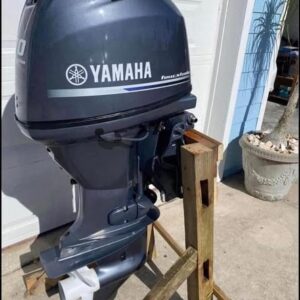
Yamaha 75HP Outboard Motor – Powerful 1.8L 4-Stroke
The Yamaha 75HP Outboard Motor delivers lightweight four-stroke performance for fishing boats, aluminum boats, bay boats, pontoons and other mid-sized recreational vessels.
Powered by Yamaha’s 1.8-liter inline four-cylinder engine, the F75 combines Electronic Fuel Injection, a Single Overhead Camshaft design and four valves per cylinder with a relatively light 353 lb package.
For boat owners looking for a dependable midrange engine, the Yamaha 75HP Outboard Motor provides an attractive balance of horsepower, weight, fuel management and trolling capability.
Browse our complete Yamaha Outboard Motors range or compare other 4-Stroke Outboard Motors.
Why Choose the Yamaha 75HP Outboard Motor?
The Yamaha F75 shares its 1.8L engine platform with Yamaha’s larger midrange engines while producing 75HP at the prop shaft.
Key features include:
- 75HP four-stroke power
- 1.8L inline four-cylinder engine
- Single Overhead Camshaft
- Four valves per cylinder
- Multi-Point Electronic Fuel Injection
- 353 lb published weight
- 35-amp alternator output
- Variable Trolling RPM capability
- Power trim and tilt
- 2.15:1 gear ratio
- 20-inch shaft
- Electric starting
Yamaha positions the F75 as part of its midrange outboard family for applications where boat owners need more displacement and torque without moving into significantly larger high-horsepower engines.
1.8L Four-Cylinder Performance
The Yamaha 75HP Outboard Motor uses a 1.8-liter inline-four architecture with an 81 mm bore and 88.9 mm stroke.
The F75’s SOHC cylinder head uses four valves per cylinder. This arrangement helps Yamaha keep cylinder-head mass down while maintaining efficient airflow.
Yamaha itself highlights an important distinction between the F70 and F75: the F70 uses a smaller 1.0L platform, while the F75 moves to the larger 1.8L platform shared with the F90 and F115 family.
That makes the F75 particularly interesting for boat owners who want 75HP while placing value on midrange displacement and torque.
Electronic Fuel Injection
The Yamaha 75HP Outboard Motor uses Precision Multi-Point Electronic Fuel Injection.
EFI controls the amount of fuel supplied according to engine operating requirements.
Benefits include:
- Consistent starting
- Smooth throttle response
- Controlled fuel delivery
- Efficient combustion
- No traditional carburetor adjustment
Actual fuel consumption will depend on the boat, propeller, load, engine RPM, trim and operating conditions.
Yamaha 75HP Outboard Motor Specifications
| Specification | Details |
|---|---|
| Model | Yamaha F75 |
| Horsepower | 75HP |
| Engine Type | Inline 4-Cylinder Four-Stroke |
| Valve Train | SOHC, 4 Valves Per Cylinder |
| Displacement | 1.8L |
| Bore × Stroke | 81 × 88.9 mm |
| Fuel Induction | Electronic Fuel Injection |
| Full Throttle RPM | 5,000–6,000 RPM |
| Prop Shaft Horsepower | 75HP @ 5,500 RPM |
| Gear Ratio | 2.15:1 |
| Published Weight | 353 lb / 160 kg |
| Alternator Output at W.O.T. | 35A |
| Starting System | Electric |
| Gear Shift | Forward / Neutral / Reverse |
| Shaft Length | 20 inches |
| Recommended Fuel | Minimum 87 Octane |
| Ethanol Blend Limit | Maximum E10 |
| Lubrication | Wet Sump |
| Trim & Tilt | Power Trim & Tilt |
These specifications are based on Yamaha’s current F75 manufacturer information.
For manufacturer specifications and documentation, visit Yamaha Outboards.
Yamaha F75 Variable Trolling RPM
Anglers can benefit from Yamaha’s Variable Trolling RPM Switch (VTS) capability.
Yamaha specifies trolling adjustment in 50-RPM increments, with the F75 supporting adjustment across approximately 550–1,000 RPM when properly equipped.
This gives anglers greater control when trolling at low speeds.
It can be particularly useful when targeting fish that require precise presentation speeds.
35-Amp Charging System
Modern fishing boats can carry considerable electrical equipment.
This may include:
- Fish finders
- GPS/chartplotters
- VHF radios
- Livewell pumps
- Navigation lights
- Bilge pumps
- Other accessories
The Yamaha 75HP Outboard Motor produces up to 35 amps through its three-phase alternator.
Yamaha says this represents substantially greater charging output than the previous F75 design.
Yamaha F75 for Fishing Boats
The F75 can be a strong option for appropriately rated fishing boats.
Its combination of 75HP, 1.8L displacement, relatively low weight and trolling capability makes it suitable for a range of freshwater and coastal applications.
When selecting an engine for a fishing boat, consider:
- Maximum hull horsepower
- Transom capacity
- Boat weight
- Typical passenger load
- Fishing equipment
- Fuel capacity
- Required range
- Electrical accessories
- Propeller requirements
Never select an outboard based on horsepower alone.
Yamaha 75HP for Aluminum Boats
The Yamaha 75HP Outboard Motor can also suit aluminum fishing and recreational boats designed for this horsepower range.
At approximately 353 lb, engine weight still needs to be compared against the boat manufacturer’s transom specifications.
Correct engine matching helps preserve:
- Boat balance
- Hole-shot performance
- Planing characteristics
- Steering
- Draft
- Overall handling
Always check the boat’s capacity plate or manufacturer documentation before installation.
Yamaha 75HP for Pontoon Boats
Some pontoons are designed to operate with engines in the 75HP range.
For pontoon applications, consider:
- Pontoon length
- Maximum horsepower rating
- Passenger capacity
- Typical load
- Intended cruising speed
- Watersports requirements
A lightly loaded recreational pontoon may have very different propulsion requirements from a heavily loaded boat regularly carrying passengers.
Yamaha F75 Weight
The current Yamaha 75HP Outboard Motor weighs approximately 353 lb (160 kg) according to Yamaha.
Weight matters particularly during repowering.
Replacing an older outboard with a newer four-stroke can change stern weight and boat balance even when horsepower remains the same.
Before repowering, verify both maximum horsepower and acceptable transom weight.
Yamaha F75 Shaft Length
Yamaha currently specifies a 20-inch shaft for the F75.
This is important because the previous description incorrectly listed both 20- and 25-inch versions.
Your boat’s transom must match the engine installation requirements.
Incorrect shaft length or mounting height can contribute to:
- Propeller ventilation
- Poor acceleration
- Excessive drag
- Handling problems
- Reduced performance
Confirm compatibility before purchasing.
Yamaha F75 Controls and Tiller Options
Yamaha states that the F75 is compatible with mechanical controls and its Multi-Function Tiller Handle configuration.
The appropriate setup depends on the boat and exact engine package.
If you’re replacing another engine, check existing:
- Controls
- Steering
- Wiring
- Gauges
- Battery
- Propeller
Changing engine brands may require additional rigging.
Freshwater Flushing
The Yamaha F75 incorporates a freshwater flushing device.
This allows the cooling passages to be flushed according to Yamaha’s procedures without starting the engine.
Regular flushing is particularly important after saltwater operation.
Owners should also inspect sacrificial anodes, cooling-system components, electrical connections and the gearcase as part of routine maintenance.
Yamaha 75HP Maintenance
Routine maintenance helps protect the performance and lifespan of the Yamaha 75HP Outboard Motor.
Important service areas include:
- Engine oil
- Oil filter
- Gearcase lubricant
- Fuel filtration
- Spark plugs
- Cooling system
- Water pump
- Sacrificial anodes
- Propeller
- Battery
- Electrical connections
- Trim and tilt system
Always follow the service schedule for your exact engine model and serial number.
Yamaha 75HP Repower
The F75 can be considered when replacing an older outboard on a compatible boat.
Before repowering, check:
- Maximum horsepower
- Maximum engine weight
- Transom condition
- 20-inch shaft compatibility
- Steering system
- Controls
- Gauges
- Wiring
- Fuel system
- Propeller requirements
The Yamaha 75HP Outboard Motor should only be installed on a boat properly rated for its horsepower and weight.
Browse our complete Outboard Engines range if your boat requires a different horsepower.
Frequently Asked Questions
Is the Yamaha 75HP Outboard Motor a 4-stroke?
Yes. The Yamaha F75 is a four-stroke inline four-cylinder outboard.
What size engine is the Yamaha F75?
The current F75 uses a 1.8-liter inline-four engine.
How much does the Yamaha F75 weigh?
Yamaha lists the current F75 at approximately 353 lb (160 kg).
What is the Yamaha F75 gear ratio?
The F75 uses a 2.15:1 gear ratio.
What fuel does the Yamaha F75 use?
Yamaha currently specifies minimum 87-octane gasoline, with a maximum ethanol blend of E10.
Does the Yamaha 75HP have EFI?
Yes. The F75 uses Electronic Fuel Injection.
Does the Yamaha F75 support trolling-speed adjustment?
Yes. Yamaha’s Variable Trolling RPM system can provide 50-RPM adjustments when properly equipped.
What shaft length does the Yamaha F75 use?
The current Yamaha F75 is listed with a 20-inch shaft.
Is the Yamaha F75 good for fishing?
It can be an excellent option for fishing boats designed for a 75HP engine. Always check the boat manufacturer’s horsepower and transom-weight limits first.
Can I use a Yamaha F75 for repowering?
Yes, provided the boat is compatible with the F75’s horsepower, approximately 353 lb engine weight, 20-inch shaft and required rigging.
Buy Yamaha 75HP Outboard Motor
The Yamaha 75HP Outboard Motor combines 75HP four-stroke performance with a 1.8L inline-four engine, Electronic Fuel Injection, 35-amp charging capability and Yamaha’s Variable Trolling RPM technology.
For fishing boats, aluminum boats, pontoons and other compatible mid-sized vessels, the F75 provides an attractive step into Yamaha’s larger-displacement midrange platform.
Before ordering, confirm your boat’s horsepower rating, transom capacity, shaft requirements and rigging compatibility.
Browse more Yamaha Outboard Motors or explore all Outboard Engines.
Specifications can change by model year and market. Confirm the exact engine configuration before purchase.



Reviews
There are no reviews yet.